

I miss a lot about America, and I’ve written a lot over the years about the challenges I face as an expat in the countryside of Slovenia. But the funny thing about experiencing life abroad is that certain things get into your system and you can’t let go of them, so when you go back to your native country, you no longer really belong there either. David from An Englishman in the Balkans calls this being an “in-betweener”, and I couldn’t agree more. I am definitely an in-betweener now. I wanted to share some of the things that have become part of my way of life. And though some may seem a bit insignificant, little things like these have a way of getting under your skin and changing your very cells. There are many, many more elements of life here that I have adopted as my own, but let’s start with these six.
Window Box Flowers are an Art Form
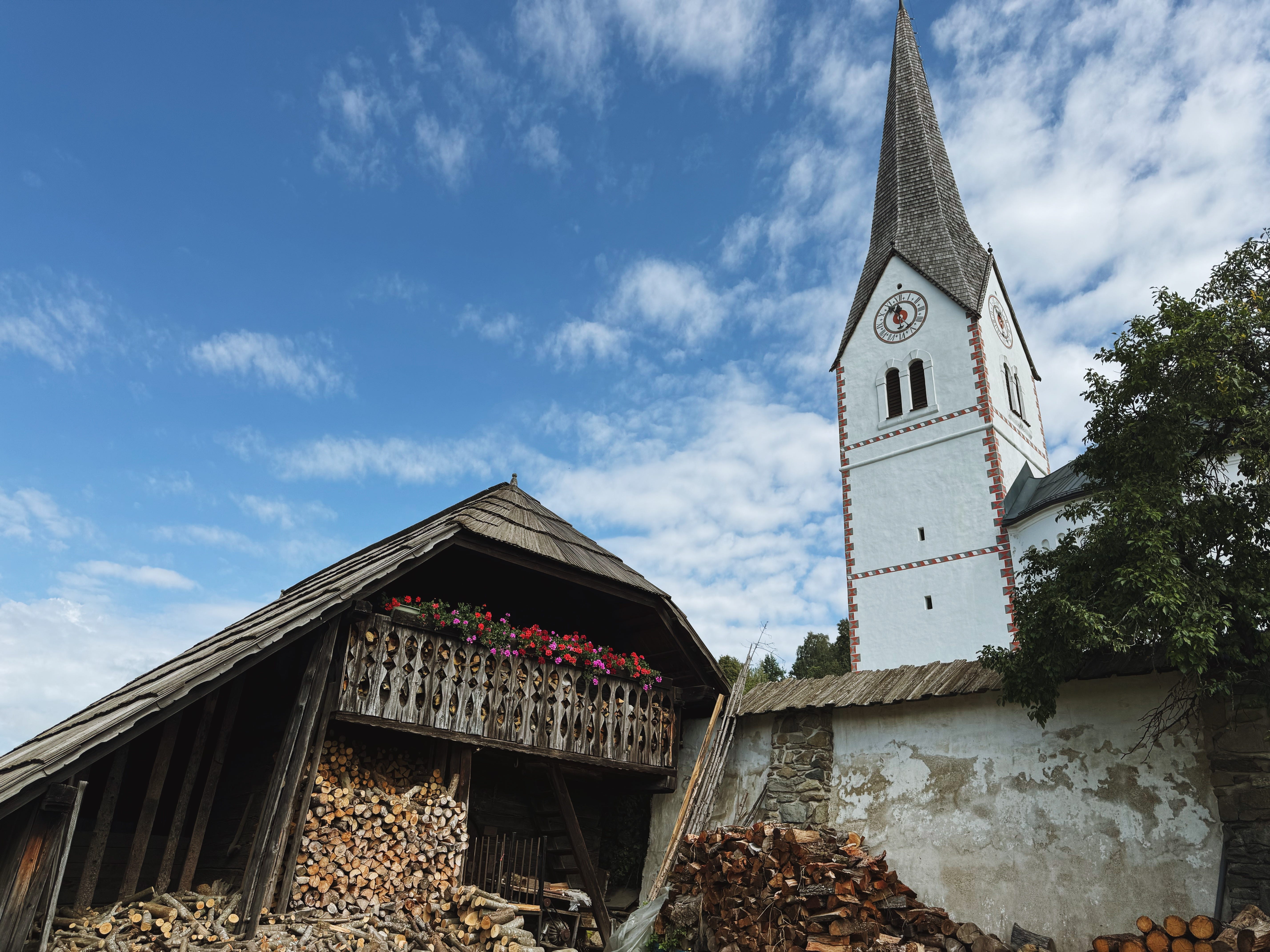
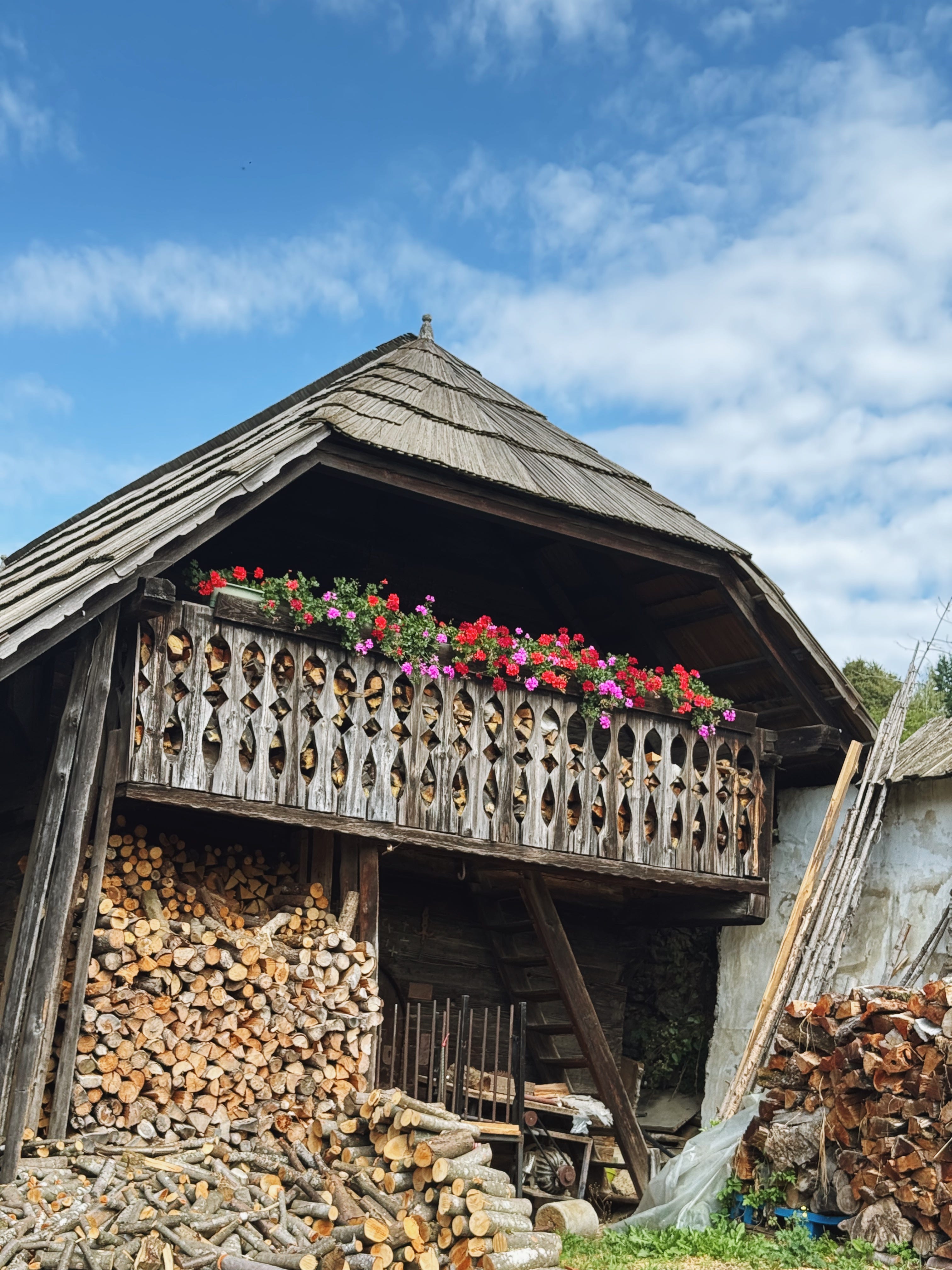
Red geraniums are classics (and my favorite), but honestly, I am in awe of all the combinations that I see around here. I mean, I never thought twice about petunias until I saw them cascading down an old farmhouse wall. Around May, grocery stores and nurseries start carrying different varieties of flowers, specifically for window boxes, and always, always, always red geraniums. The bright colors everywhere are an important counter to the long, colorless winters, and people take this art form quite seriously. They go beyond windows too! I love how even modest street signs are decorated with a pot of them. Around our region, you’ll find logs of wood hollowed out and stuffed with flowers, just because they can be. They’re whimsical, and I always stop to think about the person who took time to plant and care for them, just so that there was a bit more beauty in the world. Yes, they bring joy to the person living in the house or working in the building, but they also bring joy to anyone who looks at them. Each arrangement is a beautiful gift to the community, and I can’t imagine life without them now. I have a lot to learn in the window box flower arena, as I often forget to water and deadhead my own, so they never look that great, but I will continue to work on it until I have tumbling cascades of flowers all summer long.
No Shoes in the House
I know some Americans are already staunchly anti-outdoor-shoes-in-the-house, but I didn’t grow up that way. At first it bothered me to be asked to take my shoes off because I’d have to consider the state of my socks and because whatever outfit I had been wearing was knocked down. But now, and especially living in the countryside, I can’t imagine wearing my outdoor shoes in the house. Not only is it just gross, it’s a pain because it means I have to mop the floors even more than I already do (which is 1-2x a day thanks to my little muddy-pawed pup). I’ve become so accustomed to taking my shoes off in other people’s houses that I feel really terrible if they tell me not to (culture shock recently back in the states). And believe it or not, I really do understand and love the idea of a basket of clean slippers in the entryway for guests to choose to use (even if I prefer to wear my socks in other people’s homes). That said, I am not obsessive about this, because for my own mother, who has a pretty significant physical disability, taking off her shoes to enter a house is quite a challenge for her, especially if there is no good seating at the entryway. And she would never be able to walk in those slippers, so I don’t require it, and when people ask if they need to, I tell them to do whatever they’re comfortable with. For our family, however, we take our shoes off in our mudroom (Crocs outside), and depending on the weather, wear our own slippers in the house.
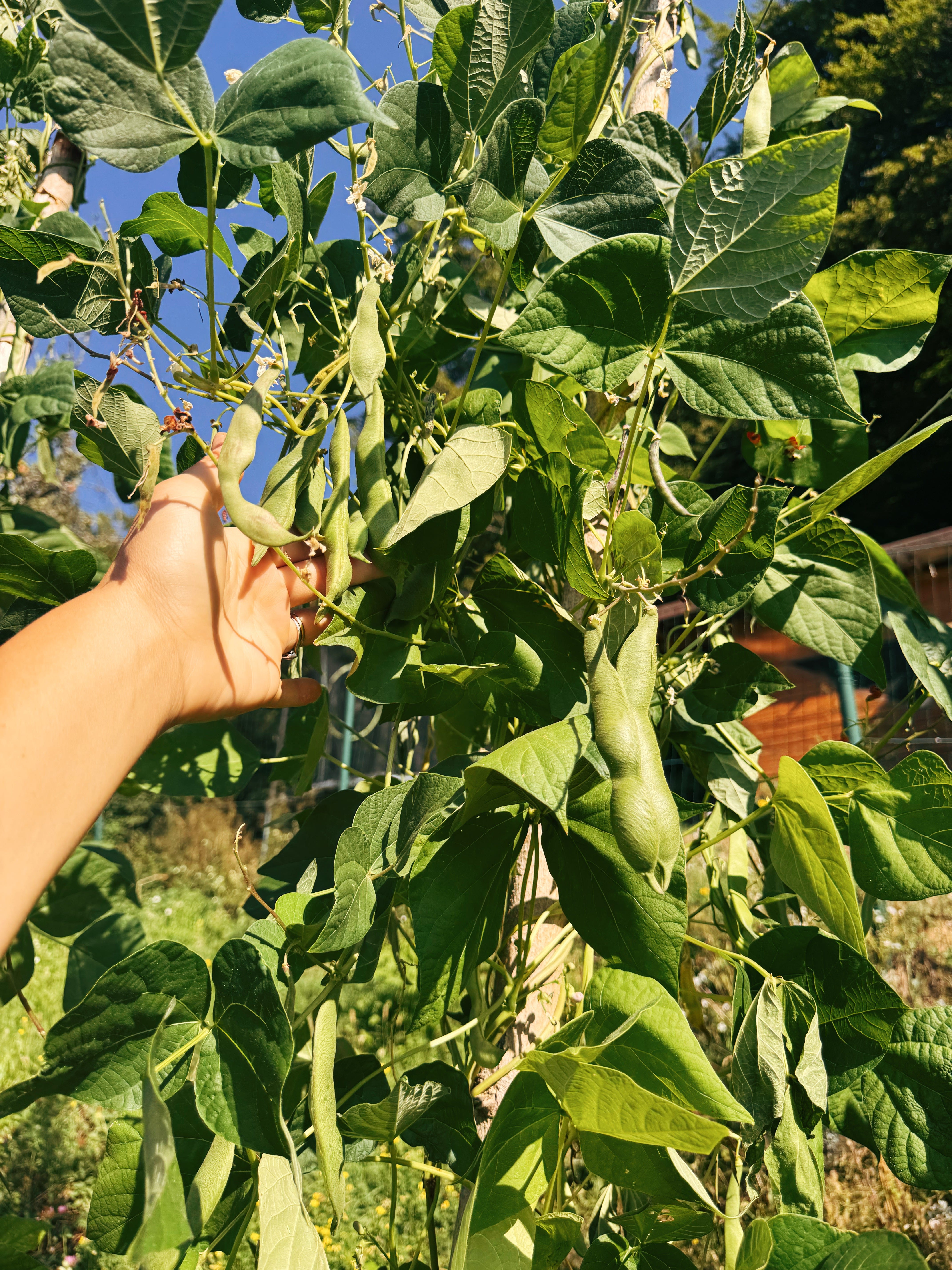
Beans Grow on a Pole.
A garden is not complete for me if there are not poles (rante) of beans growing along the edge. I know some people grow beans in teepees (and I do understand the stability of that), but something changed in me the first time I came to Slovenia and saw beans climbing up tall poles in each and every garden. I fell in love with the visual, and the border that those poles create. And so there will never be a garden I grow without bean poles. My own technique is to have very, very tall poles, pick the fresh beans that I can reach, and then anything I can’t reach is left to dry.
Everyone Should Have a Garden.
I grew up with an Italian grandmother who had a large and productive garden, canned much of her food, and was a wonderful home cook. So I suppose it was always in me, but when I came to Europe as a young adult, especially to Slovenia and the Balkans, and saw small, vegetable gardens, literally everywhere, it was like something woke up deep inside of me. I vividly remember picking beans at my then future mother-in-law’s community garden plot and thinking, “Well, this is actually what life’s all about”. In this part of the world, you’ll find gardens everywhere you look and even in the most unlikely places. There are community plots for each apartment complex (though I don’t know how much longer they will be around for, and that infuriates me), and you’ll find beds on the side of the road, shoved up against the forest. Each farm has a perfectly fenced kitchen garden, and then larger production gardens somewhere farther from the house. There’s something profoundly comforting and terrestrial about growing a garden, even if it’s just a basil plant in an apartment kitchen. Having some soil to tend to that nourishes you is a way of life for me now. It’s a form of prayer. And I can never go back.
Pumpkin Seed Oil on Cottage Cheese with Onions.
Pumpkin seed oil is abundant in Slovenia, and if you come here, you should definitely enjoy as much of it as you can. It’s a very rich flavor that I had never experienced before coming here, and the first way I ever tried it was generously drizzled on cottage cheese (skuta), with chopped onions. On paper, I should have hated that combination, but when I tried it, my taste buds danced like never before. Now it’s one of my very favorite things to eat in the entire world, especially on rye bread or a wassa cracker. Even my sister became obsessed with it when she first came here, and ate it before both of her high school proms (which I think she regretted, given the strong onion component). This dish is simple and world-changing. You think you know what you like, and then you try this, and you realize there is a world of flavor combinations to experience! If you come here, I’ll make it for you, and you can see for yourself. Don’t knock it until you try it, ok?
P.S. Next time we’ll talk about something called ajdovi žganci (buckwheat mush) and how that blew my mind for a second time.
Foraging is the Best Hobby.
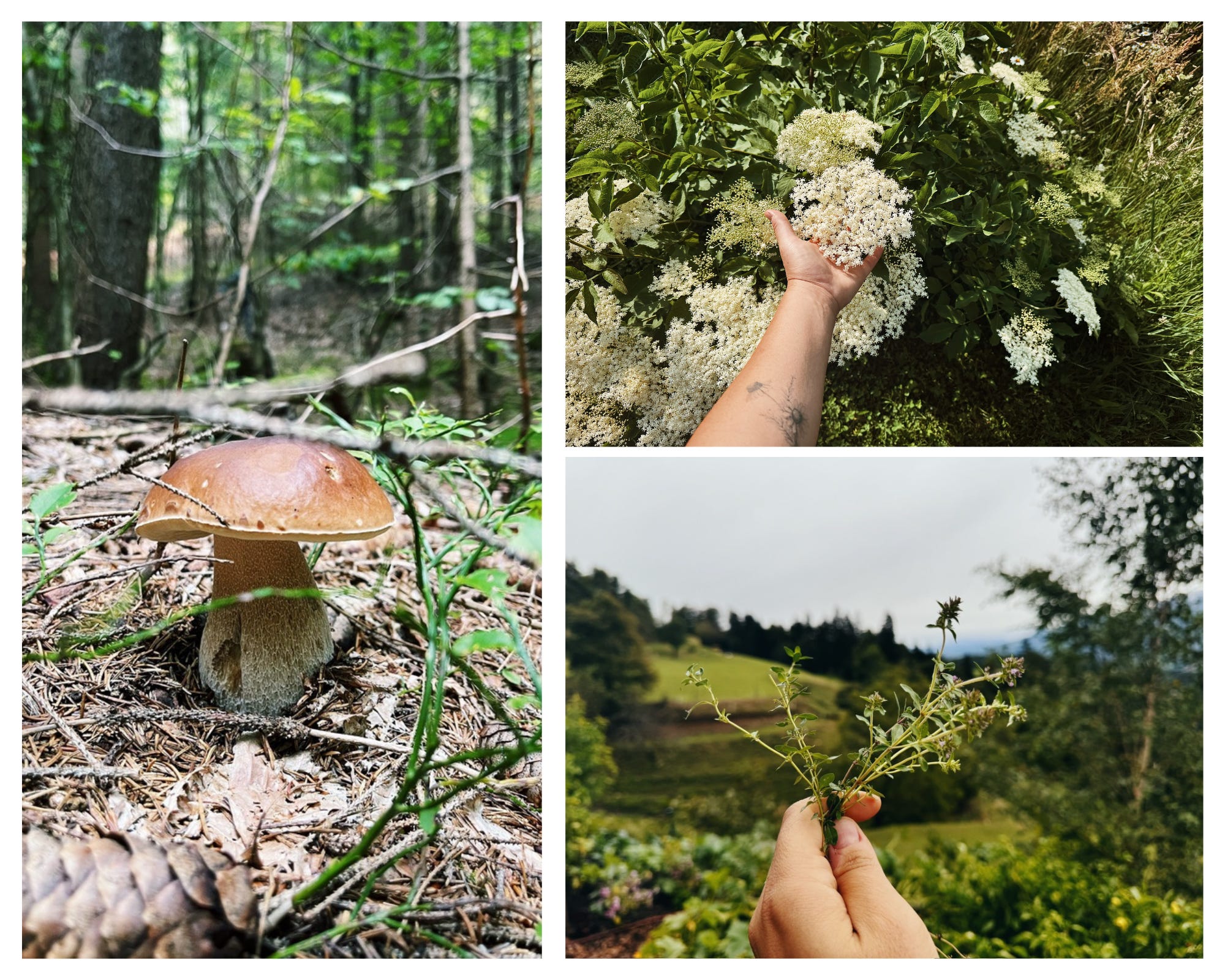
I had never picked a wild thing until I moved to Slovenia the first time in 2015. Then, I discovered wild strawberries and elderflower on the side of the road, nettles in the fields, wild blueberries in the forests, and finally wild mushrooms hiding under leaves in the Fall. I became completely obsessed with foraging, especially mushroom hunting, and would dream of spotting brown porcini caps among the leaf litter in the woods. When I moved back to America, the obsession came with me, and I experienced foraging for blackberries and giant Pacific chanterelles. And I’ve never really been the same. Foraging seems to be somewhat of a national hobby here in Slovenia. In early spring, the tender new dandelion leaves are harvested with care and appreciation, then the nettles, medicinal herbs, elderflower, wild strawberries, spruce tips, blueberries, lingonberries, chanterelles, porcini, parasols, and other mushrooms, wild thyme, rosehips, and so much more. Neighbors will even come home from the seaside with bags of foraged oregano and bay leaf as gifts. And what I’ve learned is that foraging creates a beautiful communion with the natural world. You end up seeing the generosity of nature, its ease in creating abundance, and its willingness to allow us to partake in that, so long as we’re responsible, grateful, and remain free of greed. It feels like a sacred experience — one that we’re all invited to participate in, but we have to recognize and accept the invitation. And then, we ought to emulate it with our own generosity towards others. This year, I am particularly thankful for the bags of wild blueberries in our freezer, and that my 9-year-old daughter’s little hands foraged them for us. Once you begin foraging, you see the gifts of this life much more clearly, and you can never unsee them, which might actually be the biggest gift of all.
Have you lived abroad? How did it change you? Tell me your stories in the comments!
Bonus Changes:
I firmly believe good food and wine should be affordable.
General sticker price shock when I go back to the States now.
Life without a bidet is not a life I want to live.
More Expat Posts:


Spot on. Some of this echoed for me once we started seriously microfarming/homesteading/whatever the zeitgeist phrase is, 15+ years ago. (Foraging, no shoes, eating interesting combinations of readily available foods.) But some of it is indeed learned at the feet of the elders of a culture. I've lived in several countries and am always profoundly changed by it. I also spent many years growing up with that in-between feeling, which is unnerving but forces dandelion-like growth. Very much enjoying your writing, Camilla.
Personal gardens and foraging are such wonderful additions to life..
I remember my first trip to Eastern Europe / the Balkans - to Ukraine and Bulgaria and Serbia - and seeing all the small-scale garden and farm plots. It opened my mind to what local food production could look like. I've never looked at American lawns the same way.